Understanding PPE for Cleanrooms, Healthcare, and Industrial Applications
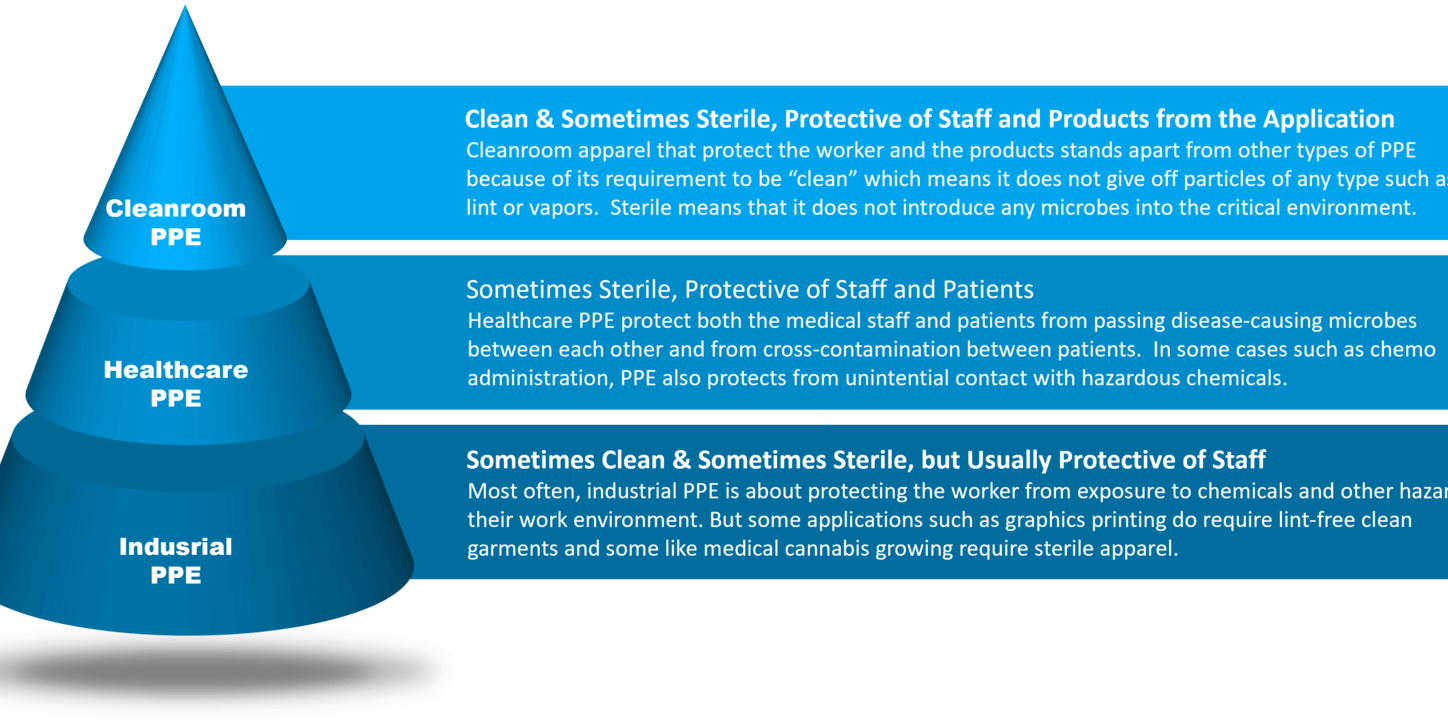
Each application within a cleanroom, healthcare facility, or industrial process is unique, with varying requirements for personal protective equipment (PPE), including specialized apparel. Sometimes apparel is designed to protect the worker, sometimes the environment, and sometimes the products being created from contamination.
Below are some general insights from our International Enviroguard catalogs for cleanrooms, healthcare, and industrial PPE.
In general, as the requirements for cleanliness and sterility increase, so do the costs of the apparel due to specialty laundering and cleanroom-packaging processes required for ultra-clean garments.
Cleanroom PPE Requirements, Purpose, and Relative Costs
Key points regarding cleanroom apparel:
-
Stringent cleanroom applications require lint-free apparel. Learn more about cleanroom classes and what to wear in each.
Additional considerations:
-
Biomedical, life sciences, and pharmaceutical compounding applications often require sterile apparel to protect the environment and products from microbial contamination.
-
All cleanroom apparel is designed to protect the environment from particles, dust, lint, electrostatic buildup, and microbes.
-
Some applications require PPE to protect the worker, using specialty materials like microporous-coated fabrics or multi-layer compositions resistant to hazardous compounds.
-
As requirements for cleanliness, sterility, and chemo-rating increase, apparel costs also rise.
Why exam gloves often aren’t suitable for cleanrooms:
-
They may release powder, residual gases, lint, or particles not removed via cleanroom laundering.
-
Packaging, such as paper boxes, can release fibers when opened.
-
Most are not chemo-rated for hazardous chemical exposure.
-
Most are not gamma-irradiated for sterility.
Though exam gloves are economical, using them in a cleanroom can increase long-term costs due to contamination risk.
Cleanroom apparel undergoes specific processes and testing, including:
-
Particle, extraction (ionic), and NVR (non-volatile residue) testing for high cleanliness.
-
Washing in deionized, filtered water (often multiple cycles), chlorination, rinsing, drying, and cleanroom packaging (double or triple bagged).
-
All processes and packaging occur in a strict cleanroom environment.
We provide wholesale prices guaranteed to be the lowest in the industry and offer free samples so you can test before committing to a full order, keeping costs down without compromising safety.
Healthcare PPE Requirements & Costs
Key points regarding healthcare and medical apparel:
-
Few healthcare applications require apparel that protects the facility from staff contamination.
Additional notes:
-
The primary purpose of healthcare PPE is to protect staff from illness and, in some cases, exposure to hazardous compounds like cytotoxic drugs. It also protects patients from exposure or infection.
-
Disposable healthcare apparel enables frequent changes to prevent cross-contamination between people or facility areas.
-
Healthcare PPE is generally less expensive than cleanroom apparel because requirements for lint-free, sterile, or chemo-rated garments are lower.
Industrial PPE Requirements & Costs
Key points regarding industrial apparel:
-
Apparel in industrial settings primarily protects workers from exposure to chemicals in the environment.
-
Cleanliness and sterility are typically not major concerns.
-
Most costs are associated with testing for permeability rather than specialized laundering or packaging, making industrial PPE less expensive than cleanroom apparel.
Questions? Ask Our PPE Experts
Have questions about which cleanroom apparel is right for your environment? Our cleanroom consultants can help you select products that match your protocols and provide free samples to ensure proper fit and function.