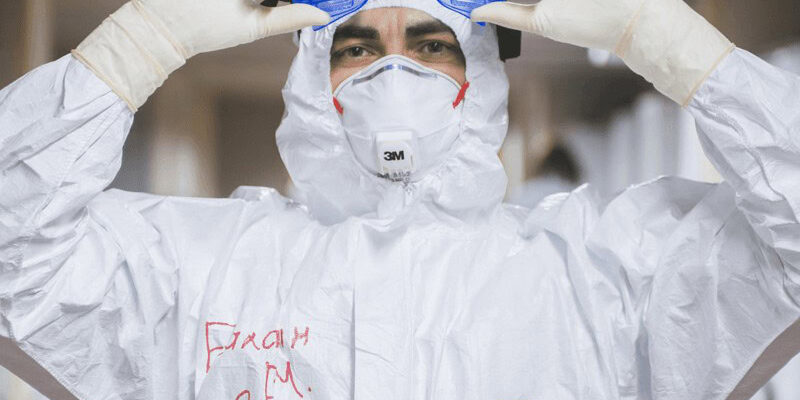
Gowning is one of the few cleanroom controls that every operator interacts with daily. While that makes it an important barrier against contamination, it’s also a common source of variability. Even with well-documented SOPs, small “workarounds” or deviations can creep in over time and undermine compliance. A gowning audit gives you a structured way to observe, document, and correct these issues without overhauling your entire SOP. At Cleanroom Connection, we understand the importance of compliance and predictability in cleanroom applications. Below, we break down the key areas to audit, with sample visuals that you can download and adapt to your own cleanroom.
Why You Must Audit Your Cleanroom Gowning Procedure
Most contamination investigations eventually come back to human interaction with the cleanroom environment. Fibers, particles, skin cells, and residues introduced during gowning can follow workers into controlled areas long before any process deviation is detected.
- Routine gowning audits help teams:
- Verify that SOPs match what actually happens on the floor
- Identify weak points in garment selection, sequencing, or handling
- Catch training gaps before they show up in environmental monitoring data
- Reinforce consistency across shifts, departments, and job roles
Rather than focusing on pass/fail outcomes, the most effective audits look for patterns. Small inconsistencies, repeated over time, often signal larger risks that are easier to correct early.
How to Use a Gowning Procedure Audit Checklist
We’ve provided a sample checklist designed to guide cleanroom managers through the core areas of auditing gowning procedures. It is meant to promote:
- Observation, not theory
- Repeatability, so results can be compared over time
- Actionability, with clear follow-up opportunities
We recommend using a checklist like this as part of scheduled internal audits, shift observations, onboarding reviews, or improvement initiatives. The goal is not to catch individual mistakes, but to evaluate whether your cleanroom’s gowning system supports consistent compliance under normal working conditions.
What to Look for During a Cleanroom Gowning Procedure Audit
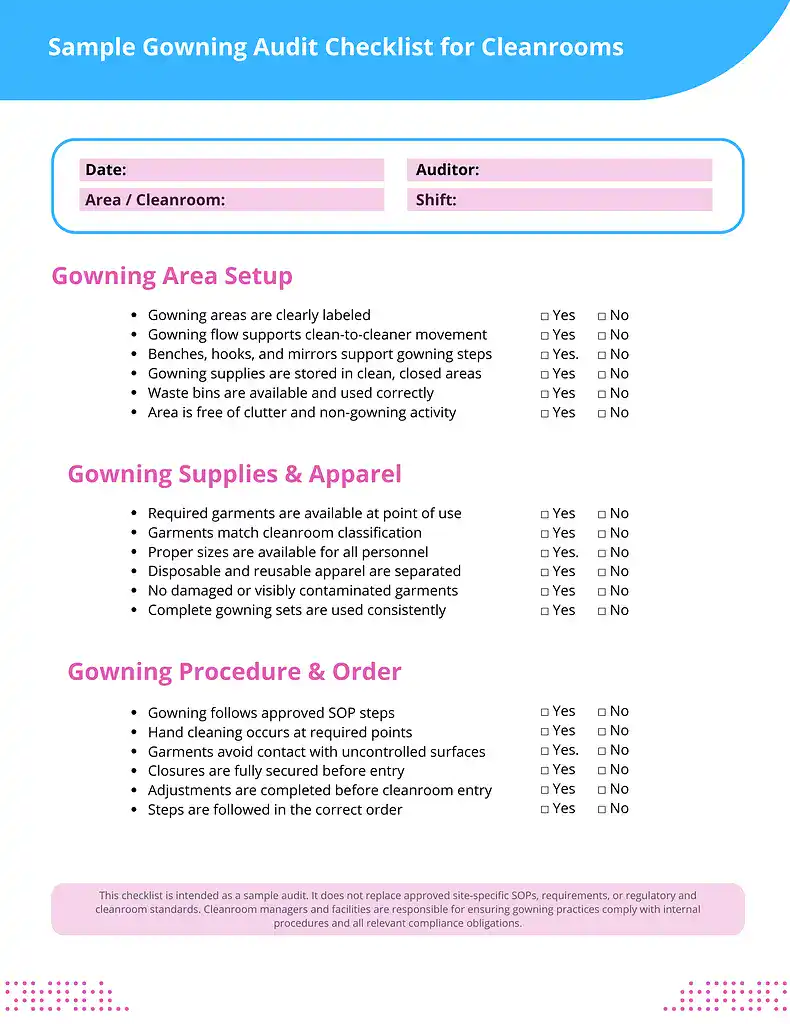
Gowning Area Readiness and Layout
Before focusing on personnel behavior, start with the environment where gowning takes place. Even well-trained operators struggle to follow procedures in poorly designed or cluttered gowning areas.
If workers need to improvise because of limited space or infrastructure, compliance will degrade over time, even if they’ve been thoroughly trained.
What to Look For:
- Gowning zones are clearly defined (uncontrolled, transition, controlled)
- Physical barriers or visual cues support proper flow direction
- Benches, hooks, mirrors, and storage are positioned to support the gowning sequence
- Surfaces are clean, intact, and appropriate for the classification
- Waste receptacles are available and used correctly
Garment Selection and Availability
An effective cleanroom gowning procedure relies on apparel that aligns with both the cleanroom classification and the work being performed. Audits should ensure all workers have access to properly sized cleanroom coveralls and suits that match the classification requirements of each area. Equally important is making sure that these suits are consistently used according to SOPs.
Issues in this area usually occur when supplies run low or when garments are viewed as uncomfortable or restrictive by cleanroom workers.
What to Look For:
- Garment types match SOP requirements for ISO classification
- Sizes are available to ensure proper fit without modification
- Disposable and reusable garments are clearly marked
- Garments are stored to prevent contamination before use
- Apparel sets are complete and consistently used

Gowning Sequence and Technique
Errors in sequence remain one of the most common gowning procedure problems. Even experienced cleanroom workers may end up adjusting steps over time, especially during high-volume periods. Auditors should observe and take note of places where employees hesitate, repeat steps, or skip actions. These moments often reveal problems with unclear instructions or impractical sequencing.
Using disposable cleanroom apparel can simplify audits and training by providing complete, pre-packaged gowning options for operators
What to Look For:
- Gowning follows documented sequence step by step
- Hands are sanitized at required points during the process
- Garments are donned without contacting uncontrolled surfaces
- Fasteners, closures, and elastic components are secured
- Adjustments are made before entering the cleanroom, not inside
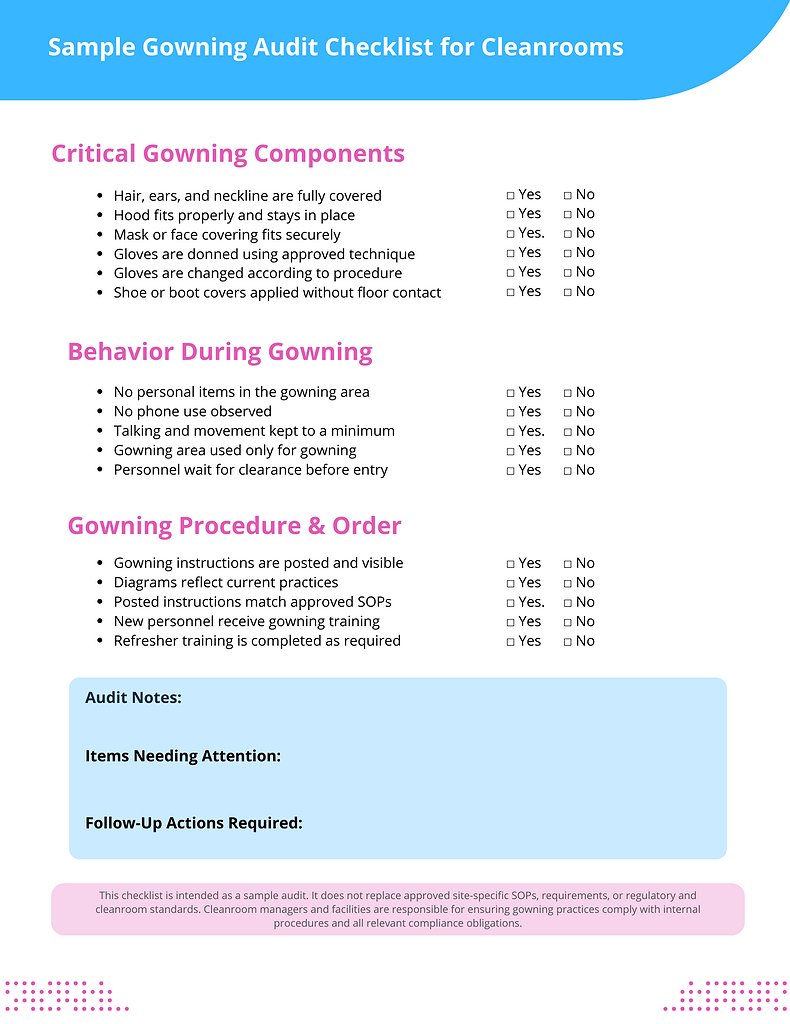
Handling of Critical Apparel Components
Certain gowning components carry a higher contamination risk because of their proximity to exposed skin or contact with the floor. Repeated adjustment of masks, gloves, or hoods during entry can signal poor fit, inappropriate materials, or lack of sizing options.
What to Look For:
- Hoods fully cover hair, ears, and neckline
- Masks and face coverings fit without needing adjustment
- Gloves are donned using approved techniques and changed when required
- Boot covers or shoe covers are donned without floor contact
- Apparel remains intact and undamaged throughout use
Behavior Inside the Gowning Area
Audits should extend beyond the act of gowning itself to include how workers behave while preparing to enter controlled spaces. Lax behavior usually occurs gradually and may go unnoticed without regular manager observation.
What to Look For:
- No personal items are brought into gowning zones
- Talking, phone use, or unnecessary movement is minimized
- Gowning areas are used only for their intended purpose
- Workers wait for proper clearance before entering controlled areas
Auditing Procedure Outside of the Gowning Area
Training, Signage, and Visual Guidance
Even the best gowning procedures rely on clear reinforcement. Audits should evaluate whether operators are supported with up-to-date guidance. Outdated diagrams or inconsistent signage can quickly undermine compliance, especially in facilities with changing processes
What to Look For:
- Gowning instructions are visible, legible, and current
- Diagrams match actual garments in use
- Training records specify role-specific gowning requirements
- New hires receive hands-on gowning instruction
- Refresher training is given regularly and updated as needed.
Documentation and Deviation Handling
A gowning audit should also consider how issues are documented and addressed. Consistent documentation supports trend analysis and continuous improvement. A lack of documented issues likely points to underreporting, rather than perfect compliance.
What to Look For:
- Gowning deviations are recorded consistently
- Corrective actions are defined and followed up
- Repeat issues are escalated appropriately
- Audit findings feed into training or SOP reviews
Turning Audit Findings Into Practical Improvements
Not every audit finding means a procedural overhaul. In many cases, small adjustments deliver big improvements. You might need to adjust available garment sizes to reduce error handling, update signage or ambiguous SOP language to reflect accurate gowning flow, or reorganize storage to prevent contamination.
Whatever improvements you need in your cleanroom, they should be shared constructively and reinforce accountability without creating resistance from team members.
Fill Your Gowning Gaps with Products from Cleanroom Connection
A well-defined cleanroom gowning procedure relies on properly selected, consistently used apparel that supports contamination control at every step. From coveralls and hoods to boot covers, masks, and accessories, each garment plays a role in maintaining cleanroom integrity during daily operations.
Browse Cleanroom Connection’s selection of cleanroom apparel to find options that meet your cleanroom classification, and explore our blog for helpful articles on choosing, maintaining, and storing cleanroom supplies.
Not sure whether your current gowning setup supports your compliance needs? Reach out to our team for help evaluating your gowning process and finding apparel solutions that support your standards, protect your team, and help keep contaminants out.