Selecting Cleanroom Wipes
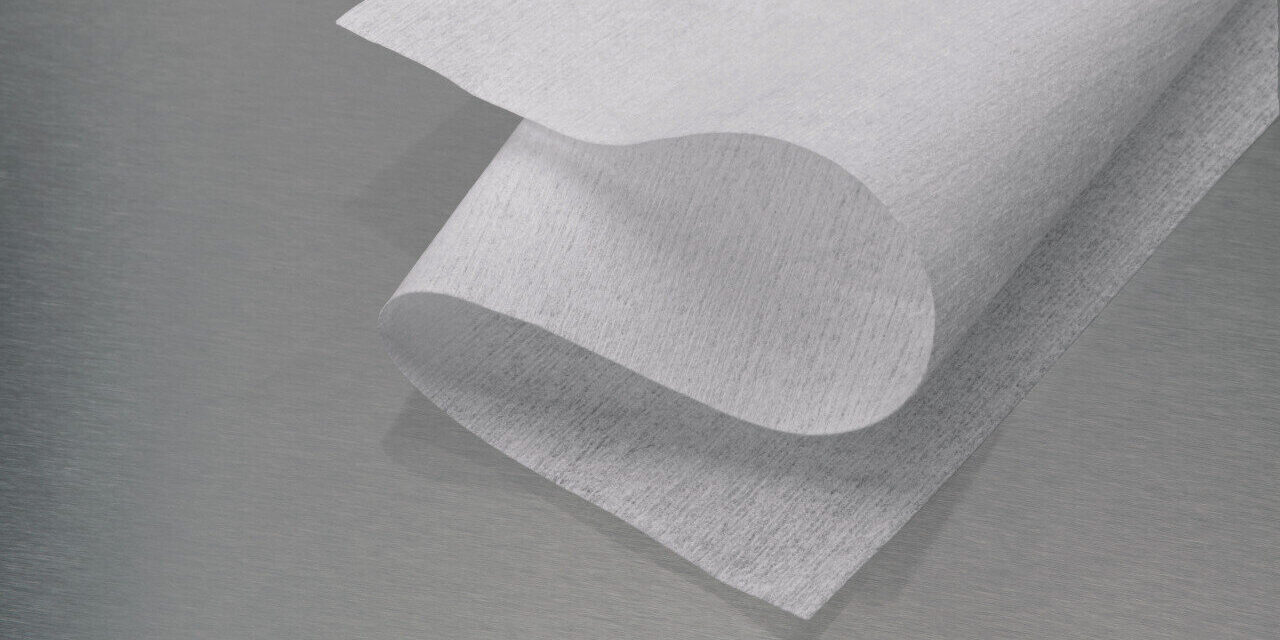
Selecting cleanroom wipes to use in your controlled environment is one of the most important decisions made for controlling contamination. They are vital not only in removing contamination but also in preventing it. Stricter cleanrooms must utilize low-linting or lint-free wipes.
Per USP <797> “Pharmaceutical Compounding: Sterile Preparations” 2008, US Pharmacopoeia, Rockville, MD Table 3, page 28:
“All cleaning materials, such as wipes, sponges, and mops, shall be non-shedding, preferably composed of synthetic microfibers, and dedicated to use in the buffer or clean area, ante-area, and segregated compounding areas and shall not be removed from the areas except for disposal.”
Let’s explore this definition further.
What is Non-Shedding?
Key points:
- There is no such thing as a contaminant-free wipe.
- Non-shedding typically means a lack of visible contamination, such as fibers that a paper towel would leave behind on a window.
- Acceptable particles include:
- Small fibers about 100 microns visible only with a microscope
- Very small particles that measure less than 1/2 micron
Wipe Cleanliness
Wipe cleanliness is critical to minimize the amount of contaminants deposited onto surfaces by wiping during cleaning and disinfecting processes. Wipes made of synthetic fibers such as polyester and polyamide nylon are much cleaner than wipes made of natural fibers such as cotton.
Variables That Impact Wipe Characteristics
The cleanliness, durability, scrubbability, abrasion-resistance, and other characteristics that may impact your cleanroom application depend on the following factors:
- Material – Synthetic materials are cleaner than natural; blended fibers can provide better strength and abrasion resistance combined with higher absorbency.
- Construction – Knitted, hydro-entangled, heat-bonded, non-woven, or woven.
- Converting – Laser cut or sealed edges.
- Laundering – Multiple laundry cycles in a controlled environment can increase assurance of cleanliness.
- Packaging – Packaging in controlled environments can assure cleanliness or sterility.
Cleanroom Wipe Testing Methods
Wipes are typically tested for:
- Particles and fibers
- Nonvolatile residues (NVR)
- Metallic and other ions
- Sorbency
One or more of the following wipe cleanliness testing methods are used to determine wipe cleanliness that appears on a product’s technical data sheet:
- Institute of Environmental Sciences & Technology Recommended Practice 4 (IEST RP-CC-004.X) – includes minimal stress test and biaxial or orbital shake tests
- Liquid particle counting
- Scanning electron microscope particulate counts
- Airborne particulate counting
- Inductively Coupled Plasma Mass Spectrometry (ICP-MS) – measures particles, ions, nonvolatile residue, and heavy metal concentration
- Manufacturers’ test methods
- End-user test methods
Cleanroom Wipe Materials
To help you more clearly understand your choices for cleanroom wipe materials, here’s an overview of the material content and common applications. Whether you opt for a dry or a pre-saturated wipe, the material it is constructed from is vital.
Natural fibers such as cotton wipes are sometimes used in less-strict facilities as they are economical and environmentally friendly, but for cleaner applications, synthetic materials are required due to lower linting and particulates.
Polyester Wipes
- Up to ISO 3 Class 1+
- Lint-free, lowest particle emissions
- High absorbency
- Superior scrubbing ability on abrasive surfaces
- Excellent for general cleaning and disinfection
Polyester/Cellulose Wipes
- Up to ISO 5 Class 100+
- Non-woven wipe
- Durable synthetic blend
- Compatible with most cleanroom chemicals
- Known as “cleanroom paper towels”
Polypropylene Wipes
- Up to ISO 5 Class 100+
- Non-woven
- Cost-efficient
- Non-abrasive
- Compatible with most solvents
- Anti-static, ESD safe
- Great for general cleaning
Polypropylene/Cellulose Wipes
- Up to ISO 6 Class 1000+
- Low-linting
- 2 heat-bonded layers (quilted wipe)
- Superior absorption
- Exceptional durability
- Excellent for general use and drying hands
Nylon Microfiber Wipes
- Up to ISO 5 Class 100+
- Cleanest non-woven option
- Lint-free
- High absorbency
- Abrasion and tear resistant
- Excellent for scrubbing and deep cleaning
Polyurethane Foam Wipes
- Up to ISO 6 Class 1000+
- Non-shedding
- Most absorbent wipe available
- Excellent for containing and mopping spills
- Often used for applying liquids
Let’s Discuss Cleanroom Wipe Material Selection
Talk with our cleanroom consultants about the right cleanroom wipes for your applications throughout your controlled environment facility. Ask for free samples to try the wipes before you buy.