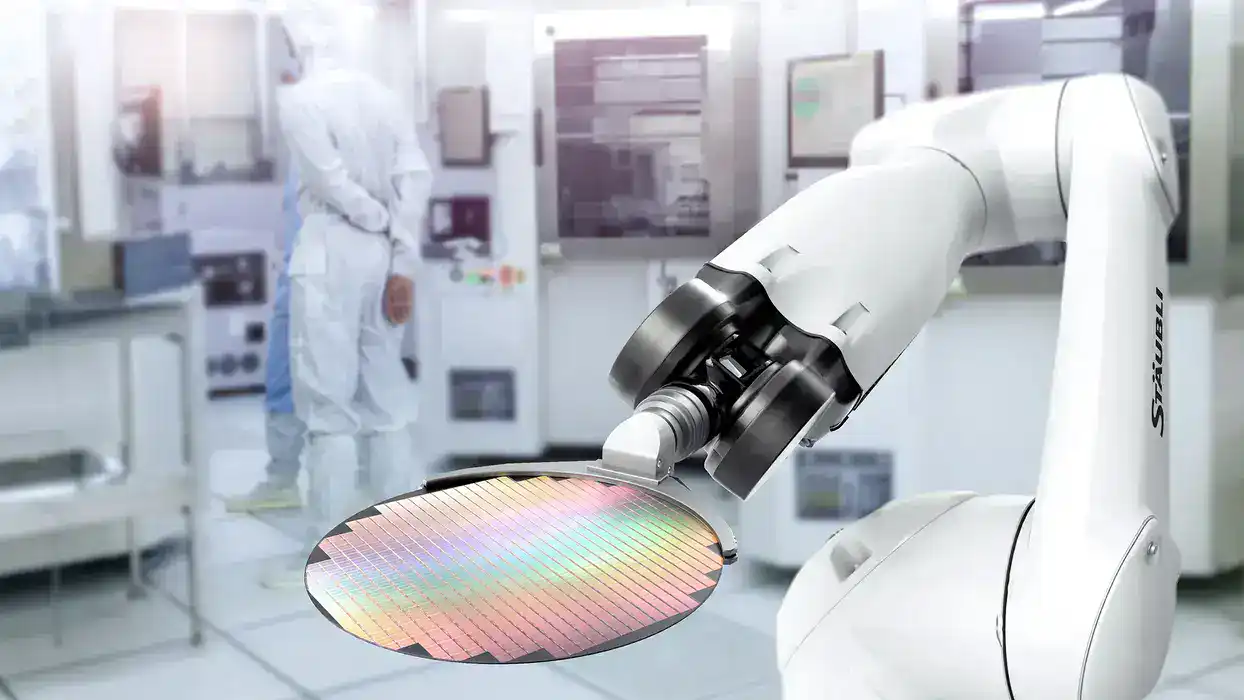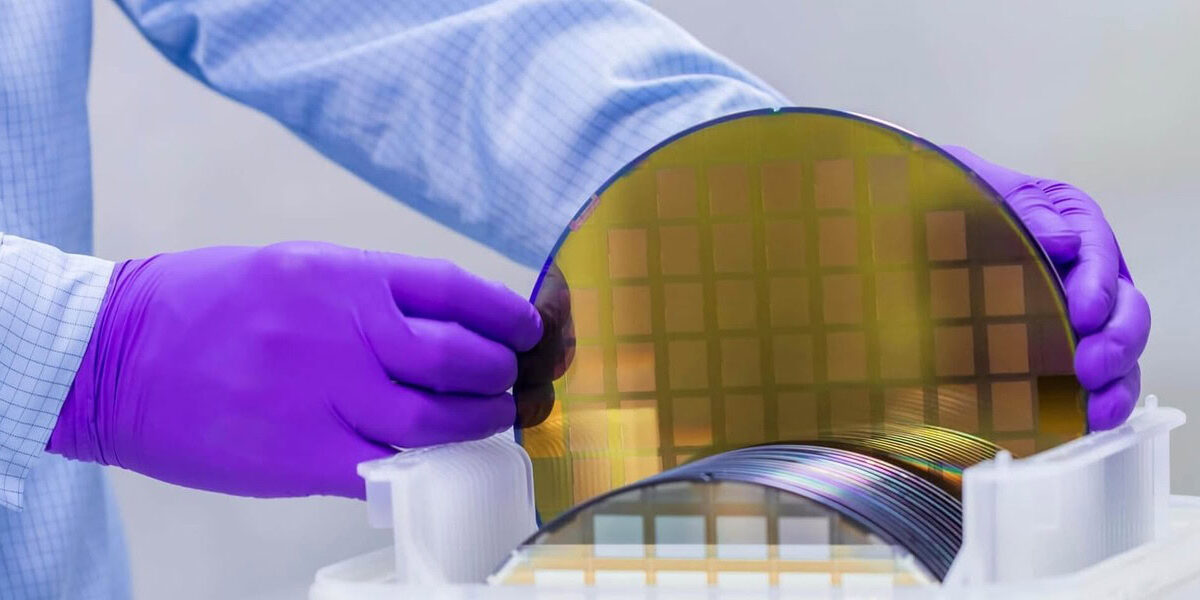
Semiconductor chips are manufactured in semiconductor cleanrooms, and are used in every computerized device — from household objects like your cell phone or coffee maker to complex machines like vehicles, defense technology, or spacecraft. They’re produced using highly sensitive materials to create delicate layers that must be worked on with care. That’s why tasks like semiconductor chip manufacturing, testing, and packaging must be carried out in a controlled cleanroom environment.
Below, we explore more about semiconductor cleanrooms, including their common applications, classifications, and design features.
What are Semiconductor Cleanrooms?
Before we dive into the many specialized features of semiconductor cleanrooms, let’s back up and get a better understanding of what semiconductors are and why they must be handled within a cleanroom.
What Are Semiconductors?
Semiconductors are made from pure silicon. This glassy, solid material is shaped when molten and then cut into thin wafers. They are valued for their unique conductive properties. Semiconductors can behave like both metals and insulators. They play a crucial role in manufacturing computer chips and circuitry. A wafer serves as the substrate for integrated circuits, also known as chips. Semiconductor chips are delicate and can be easily damaged. Even a slight inconsistency can affect their safety and effectiveness. This can, in turn, impact the performance of machines and equipment that utilize these chips. Therefore, semiconductor cleanrooms are essential. They must adhere to strict standards to maintain control over the manufacturing environment.
Boost to the Semiconductor Industry
In August 2022, the United States government passed the CHIPS and Science Act. This act aims to increase semiconductor chip manufacturing in the U.S. It intends to reduce reliance on overseas production. The act authorizes nearly $52 billion in subsidies for U.S. semiconductor manufacturing and research. It also offers an estimated $24 billion in investment tax credits for chip manufacturers. This legislation has significantly impacted the nation’s semiconductor industry. Plants that previously faced funding and resource shortages can now resume projects. Additionally, other semiconductor companies are likely to expand their operations. To support this growth, they will require more cleanrooms
Semiconductor Cleanroom Applications
Semiconductors play a vital role in various industries and applications. Maintaining quality and purity is essential in semiconductor chip manufacturing. This is why a cleanroom is necessary. Several industries and applications depend on semiconductor cleanrooms.
- Personal electronics like computers and cell phones
- Car and transportation manufacturing
- Defense, aerospace & high-tech electronics manufacturing
- Robot & AI data centers
- Medical device & biotechnology
Semiconductor Cleanroom Supplies & Apparel
When working in a semiconductor cleanroom, a critial part of maintaining this prestine static-free, particle-free environment are the cleanroom apparel and cleaning supplies used to maintain the semiconductor manufacturing facility. Cleanroom Connection supports many semiconductor cleanroom facilities with anti-static cleanroom apparel, wipes, gloves made for use in the electronics industry. DuPont IsoClean anti-static coated cleanroom suits are our most requested semiconductor cleanroom apparel. For handling these sensitive electronics, our most requested NCP Class 100 nitrile semiconductor handling cleanroom gloves. Below are a list of our most popular cleanroom products for maintaining a semiconductor fab clean room.
- Lint-free anti-static wipes are constructed using ultra-clean polyester with carbon fiber strands
- Nitrile anti-static cleanroom gloves offer safe handling of sensitive electronics and dissipate any static charges
- Class 100 cleanroom apparel has been clean-processed for use in ISO4-5 ultra-clean environments
- Anti-static tacky foam cleanroom rollers are lint-free and are used to roll over sensitive electronics to remove any particles
- Full face covering cleanroom hoods ensure no contamination from your face or mouth enters your environment
- Cleanroom sticky floor mats are placed in the entrance of the cleanroom to remove any foot-borne particles
- Cleanroom recordkeeping & documentation products are used to take notes and keep manufacturing records & logs using special lint-free paper and pens
Semiconductor Cleanroom Classifications
Semiconductor cleanrooms often operate around the clock due to the high demand for valuable circuitry components in our technology-driven society. Stringent cleanroom classifications must be maintained during the chip manufacturing process. Most semiconductor cleanrooms comply with ISO 14644-1 Class 4-6 requirements. This standard allows a maximum particle count of 352-35,200 particles that are 0.5μm or smaller. Additionally, they must adhere to ISO 14644-2, which requires a quality control system to maintain these standards. However, not all processes need such strict controls. For example, the packaging, assembly, and testing of manufactured wafers can take place in ISO class 7 or ISO class 8 cleanrooms. Semiconductor cleanrooms may also need to meet industry-specific requirements. For instance, ASTM standards apply to automotive applications, while NASA standards apply to aerospace applications. These requirements are often in addition to ISO standards. This ensures that semiconductor cleanrooms remain controlled and that the chips produced meet consistent quality standards. Any deviation from these strict standards can result in defects.

Semiconductor Cleanroom Design
Semiconductor cleanrooms need a strong design. This design helps maintain strict cleanliness standards. It also supports easy movement and workflow. Several key aspects of cleanroom design are crucial for semiconductors. It is important to consider these aspects for optimal performance
Operators & Operator Processes
In semiconductor cleanrooms, people are the primary threat to cleanliness and control. Therefore, operators must undergo special training and wear protective gear to avoid contamination. This relationship between semiconductor operators and the materials they work with is important. The processes involved in manufacturing circuitry can be harmful to human health. It is essential to design semiconductor cleanrooms that allow for the safe completion of tasks. Some cleanrooms incorporate robotic equipment and special safety protocols. These measures protect workers from hazards such as radioactive processes, toxic chemicals, lasers, and magnetic fields. Learn more about how to control ESD in your cleanroom.
Air Quality & Filtration
Semiconductor cleanrooms require a high level of air quality. They need some of the cleanest air for any cleanroom application. This is achieved through powerful HVAC and filtration systems. HEPA or ULPA filters are commonly used to process the air. These filters remove particles up to specified limits. Additionally, machines within the cleanroom often have their own exhaust systems. These systems help to eliminate unclear air and particulate matter.
Other Environmental Threats
Semiconductor cleanrooms face various environmental threats beyond airborne particle filtering. It is crucial to control several factors including static.
Electro-static discharge can damage the conductive properties of semiconductors. To mitigate this, static dissipative materials should be used for flooring, wall panels, and furniture.
Humidity is another important factor. Uncontrolled humidity can lead to inconsistent bake-out times, surface swelling, corrosion, and evaporation of solvents. Maintaining a relative humidity level between 35-65% is essential.
Out-gassing poses additional challenges. Equipment in semiconductor cleanrooms can produce outgassing, which introduces airborne contaminants. Proper equipment cleaning and maintenance, along with consistent air filtration, are necessary to manage this issue effectively.