Most failed USP 797 inspections do not come down to one dramatic problem. They come down to the cleaning log: a surface wiped with the wrong agent, a frequency that does not match the documented SOP, or a wipe that was not validated for the ISO class it touched. Cleanroom cleaning is one of the most audited elements of a compounding pharmacy inspection, and the standard is specific about what is required, when, and with what products.
This guide covers what USP 797 requires for cleaning each zone of your controlled environment, how to set frequencies by ISO class, which cleanroom cleaning supplies are appropriate for each area, and how to document your program so the log matches the protocol.
What USP 797 Requires for Cleanroom Cleaning
USP 797 establishes cleaning and disinfection requirements for the three controlled-environment zones common to a compounding pharmacy: the ISO Class 5 primary engineering control (PEC), the ISO Class 7 buffer area, and the ISO Class 8 ante-room.
The standard requires that each area be cleaned and disinfected at defined intervals using agents appropriate to that area’s contamination risk. It also requires sterile cleaning agents inside ISO Class 5 environments and mandates a sporicide be rotated with your primary disinfectant on a scheduled basis.
Documentation is not optional. Every cleanroom cleaning event must be recorded in a log, capturing the date, time, agent used, surfaces cleaned, and initials of the person performing the work. An undocumented cleaning is, from an audit standpoint, a cleaning that did not happen.
Cleanroom Cleaning Frequencies by ISO Classification
ISO Class 5: Primary Engineering Control
The ISO Class 5 PEC, whether a laminar airflow workbench or a biological safety cabinet, is the highest-risk surface in your pharmacy. USP 797 requires it to be cleaned at the start of each shift, before and after each compounding batch, and whenever a spill or contamination occurs.
All cleaning agents used inside the ISO Class 5 PEC must be sterile. Using a non-sterile wipe or disinfectant in the critical zone introduces a risk of contamination that defeats the purpose of the controlled environment. This is non-negotiable under USP 797.
ISO Class 7: Buffer Room
The buffer room requires cleaning and disinfection at a minimum daily when in use. Work surfaces, countertops, and equipment should be wiped down at the start of each compounding session. Floors require daily cleaning with a germicidal agent. At monthly intervals, walls, ceilings, and storage shelving should be included in the cleaning cycle.
ISO Class 8: Ante-Room
The ante-room must be cleaned at a minimum daily when in use. Because this area handles higher traffic than the buffer room, high-contact surfaces such as door handles, pass-through exteriors, and supply staging counters should be wiped down more frequently during high-volume compounding periods.
Disinfectant Rotation: Why One Agent Is Not Enough
USP 797 requires your cleanroom cleaning program to rotate between more than one type of disinfectant. Repeated use of a single agent allows organisms with partial resistance to accumulate over time. Rotating between a sporicidal agent and a broad-spectrum disinfectant addresses different contamination categories and reduces the risk of adaptation.
A standard rotation looks like this: your primary disinfectant, typically an IPA-based or quaternary ammonium product, handles daily cleaning. A sporicide, typically a bleach-based or hydrogen peroxide-based product, rotates in on a weekly or monthly schedule based on your risk assessment. All products used inside ISO Class 5 must be sterile. Products used in ISO Class 7 should be pharmaceutical-grade cleanroom-rated and compatible with the surfaces in that room.
Cleanroom Cleaning Supplies Required for USP 797
Reusable cleaning materials have no place in a USP 797-compliant program. Reusable mops and cloths cannot be reliably decontaminated between uses and introduce uncontrolled variables into your cleaning documentation. A compliant program requires disposable cleanroom cleaning supplies throughout.
Cleanroom Wipes
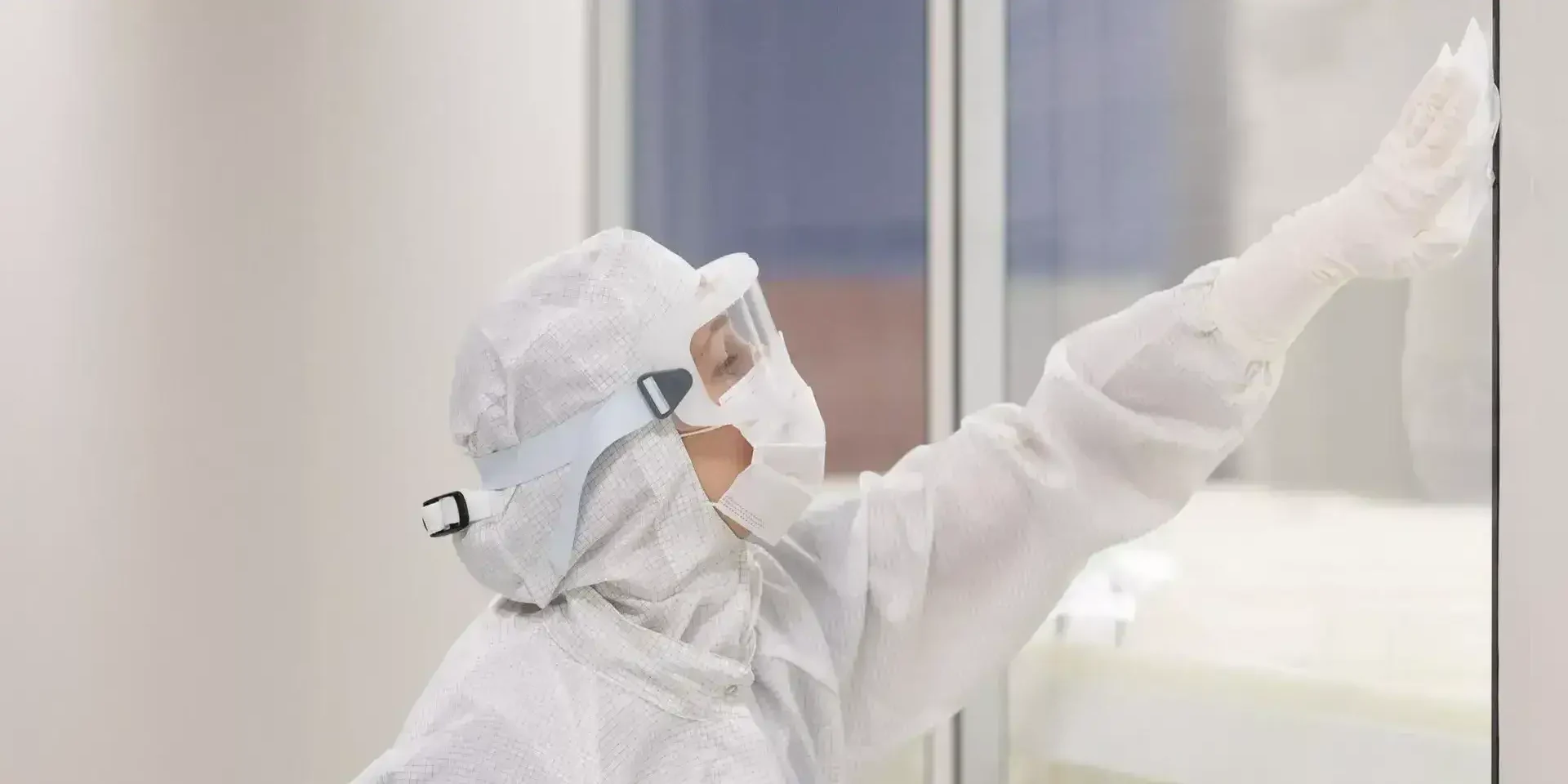
Pre-saturated sterile wipes are the correct choice for ISO Class 5 surfaces. They eliminate the measurement error and contamination risk that comes with manually saturating a dry wipe at point of use. For ISO Class 7 and 8 surfaces, pre-saturated non-sterile wipes rated for cleanroom use are appropriate.
Wipe material matters. Polyester knit wipes generate fewer particles than cotton or polypropylene. For critical surfaces, look for low lint, low particle generation, and confirmed compatibility with the disinfectant being applied.
Cleanroom Connection stocks pre-saturated wipes from Veltek/VAI and Decon Labs, validated for use in pharmaceutical cleanroom environments.
Mop Systems and Floor Cleaning
ISO Class 7 and 8 floors require dedicated mop systems with disposable heads. Mop heads should be changed between rooms and never reintroduced into a higher-classification zone after use in a lower-classification area. Cleanroom-compatible mop frames with disposable pad attachments are the correct approach for compliant floor cleaning.
Cleaning Chemicals and Disinfectants
Buckets and cleaning carts that enter the buffer or ante-room should be dedicated to that zone and cleaned on a regular schedule. Use disposable accessories wherever possible to reduce cross-contamination risk between cleaning sessions.
Building and Documenting Your Cleaning SOP
USP 797 does not just require that you clean. It requires a documented Standard Operating Procedure that specifies the scope of cleaning for each zone, the agents used, the frequency, the responsible personnel, and the verification method.
Your SOP must map directly to your cleaning log. If your SOP says the buffer room floor is cleaned daily with a specific agent, your log should show that happening, with the correct agent recorded, every operational day. A gap between the SOP and the log is an audit finding.
Review your SOP at minimum annually and any time you change agents, equipment, or cleanroom configuration.
Frequently Asked Questions
What disinfectants are acceptable for cleanroom cleaning under USP 797?
USP 797 does not mandate specific brand names, but it requires disinfectants appropriate to the ISO classification and a sporicide included in the rotation. For ISO Class 5 surfaces, agents must be sterile. Common choices include sterile isopropyl alcohol (70%), bleach-based sporicides, and quaternary ammonium products rated for pharmaceutical cleanroom use.
How often does an ISO Class 7 buffer room need to be cleaned?
At minimum daily when in use, with monthly deep cleaning of walls, ceilings, and fixed equipment. Higher-volume compounding pharmacies may need more frequent surface cleaning depending on their risk assessment and SOP.
Can the same wipes be used in ISO Class 5 and ISO Class 7?
No. ISO Class 5 requires sterile wipes and sterile disinfectants. ISO Class 7 does not require sterile products, but materials must still be cleanroom-rated with low particle generation. Using non-sterile wipes inside the ISO Class 5 PEC is a compliance violation.
Does USP 797 require a sporicide at every cleaning?
No. Sporicides are required on a rotating basis, not for every cleaning event. Rotation frequency should be defined in your SOP based on your environment’s risk assessment. Weekly or monthly rotation is standard, with daily sporicidal application reserved for post-contamination events or high-risk scenarios.
What records are required for USP 797 cleanroom cleaning?
A cleaning log for each zone capturing the date, time, surfaces cleaned, agent used, and the initials of the person who performed the cleaning. These records must be retained and available for inspection.
Get the Right Cleanroom Cleaning Supplies for Your Protocol
A compliant cleanroom cleaning program starts with a documented SOP and the right disposable products to execute it. If you are building out your supply list or validating existing products against current USP 797 requirements, Cleanroom Connection can help.
Submit your product list at cleanroomsupplies.com and receive pricing within 30 minutes.