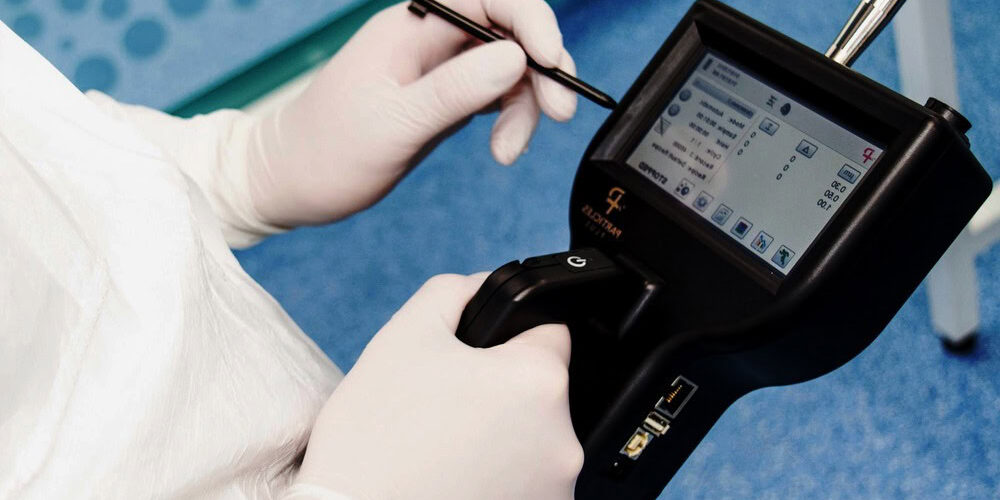
A cleanroom is called a “clean room” for a reason. Critical applications that are sensitive to airborne particulates, bacteria, static and other environmental factors take place in these specialized controlled environments. In an era where precision and cleanliness are pivotal, the significance of cleanroom standards cannot be overstated. Cleanrooms play a critical role across various industries, ensuring that products are manufactured in environments free from contaminants. Cleanroom supplies are specialized apparel, cleaning products and related items that are used to maintain these very critical environments.
ISO standards provide the framework necessary to maintain these sterile conditions, defining acceptable particle levels in the air and establishing guidelines that facilities must adhere to. Understanding these classifications—from ISO 1, the cleanest, to ISO 9—helps industries maintain compliance and ensure product integrity.
This article will delve into the intricacies of cleanroom standards, highlight their impact across different sectors, and provide a clear understanding of each ISO class, making sense of the complex world of cleanroom regulations.
Importance of Cleanroom Standards
Cleanroom classifications play a pivotal role in preventing contamination risk and ensuring the quality of medical and pharmaceutical products. By adhering to ISO standards, especially ISO 14644, industries gain a reliable framework for designing and operating cleanrooms. This ensures that each cleanroom caters to its specific cleanliness needs.
Cleanroom standards, like those outlined in Good Manufacturing Practice (GMP), focus on various production elements. These include quality control, packaging, personnel, and the facility to maintain high cleanliness levels. Ongoing monitoring and validation through ISO 14644-2 are vital. They ensure product quality and uphold the integrity of cleanroom environments.
Meeting these standards offers several benefits. It helps organizations comply with regulatory requirements and control costs, avoiding over-investing in unnecessary cleanliness levels.
For clarity, here is a quick list of key aspects cleanroom standards cover:
- Quality Control: Ensures product safety and purity.
- Packaging: Maintains sterile conditions.
- Personnel: Trained staff reduces contamination risks.
- Facility Requirements: Ensures a high level of cleanliness.
Overall, cleanroom standards are essential for success in industries where contamination can have serious consequences.
Overview of ISO Cleanroom Standards
Cleanrooms are vital in industries where contamination control is crucial. They are classified into nine ISO categories, from Class 1 to Class 9. The classification depends on the maximum allowable number and size of particles per cubic meter of air. ISO 14644-1 is the primary standard for cleanroom environments. This standard replaced Federal Standard 209E in 2001, setting stricter rules for particle contamination.
ISO standards help create a consistent framework for cleanroom design, operation, and monitoring. These standards cover particle limits, airflow velocities, and air change rates. By adhering to ISO classifications, industries ensure their cleanrooms meet specific cleanliness needs.
Understanding ISO 14644-1
ISO 14644-1 establishes cleanliness levels for cleanrooms through a classification system. It ranges from ISO Class 1, the cleanest, to ISO Class 9, which matches regular room air. Each class specifies the maximum particles allowed by number and size. It also defines airflow velocity, air change rates, and HEPA/ULPA filter coverage.
This standard ensures cleanroom environments are consistent worldwide, promoting international collaboration. Industries using cleanrooms rely on ISO 14644-1 for maintaining product integrity and protecting workers.
Classifications of Cleanrooms
ISO 14644-1 outlines nine cleanroom classes based on cleanliness. Here’s a breakdown:
- ISO Class 1: Allows 10 or fewer particles at 0.1 microns and 2 or fewer at 0.2 microns per cubic meter.
- ISO Class 9: Equivalent to standard room air, it allows up to 35,200,000 particles at 0.5 microns and 293,000 particles at 5 microns per cubic meter.
ISO classifications standardize cleanroom operations and design. They ensure environments meet necessary airborne particle limits according to industrial needs. Each class builds on the earlier FS 209E standards, aligning differently based on specific particle limits.
|
ISO Class |
Particle Size (Microns) |
Max Particle Number per Cubic Meter |
|---|---|---|
|
Class 1 |
0.1 |
10 |
|
Class 2 |
0.3 |
100 |
|
Class 3 |
0.5 |
1,000 |
|
Class 4 |
1.0 |
10,000 |
|
Class 5 |
5.0 |
100,000 |
|
Class 9 |
5.0 |
293,000 |
In summary, ISO cleanroom standards play a crucial role in various industries. By understanding and following these standards, organizations can maintain high-quality products and safe working environments.

Detailed Breakdown of ISO Classes
ISO 14644-1 sets the international standards for cleanroom classifications. It divides cleanrooms into nine classes, from ISO Class 1 to ISO Class 9. These classifications determine the level of cleanliness by the number and size of airborne particles allowed per cubic meter. Let’s explore each class to understand better how they respond to specific cleanliness needs.
ISO Class 1
ISO Class 1 represents the pinnacle of cleanliness. It’s used in precision fields like semiconductor manufacturing. This class allows up to 2 particles larger than 0.2 microns per cubic meter of air. To maintain this level, air changes 500 to 750 times per hour, with at least 80% of the ceiling covered by filters. High-Efficiency Particulate Air (HEPA) or Ultra-Low Particulate Air (ULPA) filters are necessary to achieve these strict conditions.
ISO Class 2
In an ISO Class 2 cleanroom, fewer than 11 particles over 0.3 microns and none over 1.0 micron are allowed per cubic meter. Typically, these rooms need 500-750 air changes per hour. Class 2 cleanrooms rely heavily on ULPA filters and often have a fully covered ULPA ceiling. Industries like pharmaceuticals and precision manufacturing often employ these cleanrooms.
ISO Class 3
ISO Class 3 allows fewer than 102 particles above 0.3 microns and up to 8 particles over 1.0 micron per cubic meter. With air changing 500-750 times an hour, ULPA filters maintain cleanliness. Key features include full ULPA ceiling coverage and raised floors. ISO Class 3 is a critical ranking for maintaining low levels of airborne contaminants.
ISO Class 4
In ISO Class 4, the cleanroom can contain up to 1,020 particles larger than 0.3 microns, and no more than 2 particles above 5.0 microns per cubic meter. About 500 to 600 air changes happen per hour. These rooms also feature full ULPA filter ceilings and raised floors to ensure top cleanliness, crucial for sensitive manufacturing processes.
ISO Class 5
ISO Class 5 is vital for semiconductor and pharmaceutical industries. It requires fewer than 3,520 particles over 0.5 microns per cubic meter. This class needs 250-300 HEPA-filtered air changes each hour. Access to ISO Class 5 cleanrooms often requires passing through lower-class airlocks, ensuring contaminant control.
ISO Class 6
ISO Class 6 permits up to 35,200 particles larger than 0.5 microns per cubic meter. Common in medical device production, it requires about 180 HEPA air changes per hour. Cleanrooms at this level sometimes use unidirectional airflow for better particle management.
ISO Class 7
ISO Class 7 maintains fewer than 352,000 particles over 0.5 microns per cubic meter. It requires at least 60 air changes each hour with HEPA filters. Industries like pharmacy compounding and electronics manufacturing frequently employ ISO Class 7 cleanrooms to prevent contamination.
ISO Class 8
Allowing up to 3,520,000 particles under 0.5 microns per cubic meter, ISO Class 8 is slightly cleaner than normal room air. Common in simpler manufacturing processes, this classification helps maintain a cleaner environment than a standard room, proving essential for less critical contamination control.
ISO Class 9
ISO Class 9 is the least stringent in the ISO system. However, it is still cleaner than uncontrolled spaces. By maintaining a baseline cleanliness level, ISO Class 9 is often used as a starting point for monitoring and managing particle concentrations in various environments. This classification illustrates the introduction of controlled standards beyond typical room air.

Particle Concentration and Air Quality
In cleanrooms, controlling particle concentration is crucial. These rooms are classified according to the maximum permitted concentration of airborne particles. For example, a Grade A cleanroom aligns with ISO Class 5 standards. At rest, it allows up to 3,520 particles ≥ 0.5 µm per cubic meter. Cleanrooms are essential in industries like pharmaceuticals and electronics, where contamination can disrupt the manufacturing process.
A Grade B cleanroom is even stricter. While it still allows 3,520 particles ≥ 0.5 µm per cubic meter at rest, it permits up to 352,000 particles in operation. This matches ISO Class 5 at rest and ISO Class 7 during operation. Grade C cleanrooms have more relaxed limits, permitting up to 352,000 particles at rest and 3,520,000 in operation, aligning with ISO Class 7 and 8.
Defining Particle Concentration
Understanding cleanroom classification relies on knowing the maximum concentration of airborne particles. These are measured in particles per cubic meter of air. The cleanroom classification table defines limits for different particle sizes, from 0.1 µm to 5 µm.
Here’s a snapshot:
|
ISO Class |
Particles ≥ 0.5 µm per Cubic Meter |
|---|---|
|
1 |
10 |
|
5 |
3,520 |
|
7 |
10,000 |
|
9 |
~1,000,000 (room air cleanliness) |
ISO Class 1 allows only 10 particles ≥ 0.1 µm, while Class 9 is similar to room air. Maintaining these standards is vital for preventing contamination in controlled environments.
Measuring Air Quality
To ensure cleanroom standards, measuring air quality is imperative. ISO classifications are based on particle size and quantity in the air, setting cleanliness standards. Devices like active air samplers help monitor air quality by counting microorganisms in specific air volumes.
The air change rate also plays a key role. It determines how fast air is removed and replaced, which impacts air quality and the risk of contamination. According to ISO 14644-2, regular testing of particle counts and airflow ensures ongoing compliance with these standards. Cleanroom design must include efficient air distribution systems to minimize contamination and maintain air quality. This requires a keen focus on adequate air returns and cleanliness level.
Importance of Compliance with Cleanroom Standards
Compliance with cleanroom standards, like ISO 14644, is crucial in keeping manufacturing environments free from contamination. These standards ensure consistent cleanliness levels across industries by providing a universal framework. This facilitates collaboration and quality control, especially in sectors like semiconductor production, where preventing defects is pivotal.
Adhering to cleanroom classifications minimizes risks from particles and microorganisms. It is crucial for maintaining the safety and quality of products. This is particularly important for industries producing medical devices and sterile products.
Organizations benefit economically from these standards by optimizing their investments in cleanliness. Meeting necessary cleanliness levels without overinvesting in unnecessary measures helps manage costs effectively.
Cleanroom standards also lead to regional standardization, like Germany’s VDI 2083, which integrates with ISO guidelines to address specific industry needs.
Key Benefits of Cleanroom Compliance:
- Reduced risk of contamination
- Improved product safety and quality
- Optimized cleanliness investment
- Enhanced process control
- Facilitated international collaboration
By following international standards, cleanroom environments achieve the desired level of control needed for effective manufacturing. Compliance is thus essential for reducing the risk of contamination and ensuring efficient production processes.
Testing Protocols for Cleanroom Standards
Testing protocols play a key role in maintaining cleanroom classifications and meeting ISO standards. Cleanroom classification depends on the number and size of particles allowed per cubic meter of air. ISO 14644-1 and Federal Standard 209E specify how particle count measurements determine cleanliness levels.
Key Testing Protocols Include:
- Non-Viable Particle Counting: This method measures particle size and concentration, ensuring cleanliness levels in environments.
- Airflow Volume and Velocity Readings: These readings check that air flows correctly, maintaining cleanliness and performance.
- HEPA Filter Integrity Testing: Testing ensures that HEPA filters, which capture airborne particles, are leak-free. While not always mandated by ISO standards, it is required by regulations like those from the FDA.
ISO 14644-3 outlines methods to test performance, helping facilities validate and monitor cleanroom operations. These methods focus on airborne particles and airflow patterns essential for maintaining cleanroom environments.
Routine Monitoring and Validation
Routine monitoring and validation ensure cleanrooms comply with ISO 14644-2, maintaining the integrity and quality of products. This process protects both investments and reputations. ISO 14644-3 emphasizes test methods to monitor airborne particles and airflow.
Essential Monitoring Steps:
- Particle Counts and Airflow Evaluations: Regular checks confirm adherence to cleanliness standards, detecting any deviations promptly.
- Cleaning and Maintenance: These practices are crucial for preserving system integrity and ensuring optimal process control.
Cleanroom qualification requires a structured approach. It involves Installation Qualification (IQ) and Operational Qualification (OQ) stages, with thorough planning, execution, and documentation. Various sampling methods assess microbial contamination, providing a comprehensive look into the cleanroom’s condition.

Cleaning and Maintenance Procedures
Cleaning and maintenance uphold cleanliness standards in cleanrooms, reducing contamination risks. Routine monitoring includes regular particle counts and airflow assessments to keep standards consistent. Cleanroom cleaning products include cleanroom cleaning chemicals, cleanroom wipes and cleanroom mops.
Key Procedures for Effective Maintenance:
- Gowning and Entry/Exit Procedures: Well-defined protocols prevent personnel from bringing contaminants in or out of cleanroom environments.
- Continuous Monitoring Systems: Utilizing particle counters and environmental control systems helps track cleanliness and environmental parameters.
- Documentation and SOPs: Proper cleanroom documentation ensures all procedures are followed, maintaining consistent standards.
By adhering to these practices, cleanroom environments meet industry-specific cleanliness requirements. This safeguarding helps maintain product integrity and control within processes.
Routine Monitoring and Validation
Routine monitoring and validation are key to maintaining the efficiency of cleanrooms. Compliance with ISO 14644-2 is vital for ensuring product quality and protecting investments. Regular assessments, such as particle counts and airflow evaluations, are performed to adhere to cleanliness standards.
Key Aspects of Cleanroom Monitoring:
- Particle Counts: Keep track of airborne particle concentrations.
- Airflow Evaluations: Ensure proper airflow patterns are maintained.
ISO 14644-3 focuses on the test methods needed to validate and monitor these performances. Effective cleanroom qualification involves stages like Installation Qualification (IQ) and Operational Qualification (OQ). Planning, execution, and documentation are crucial at each stage.
Cleanroom Qualification Stages:
- Installation Qualification (IQ): Verifying that the cleanroom is installed correctly.
- Operational Qualification (OQ): Ensuring equipment operates within the set parameters.
To assess microbial contamination, various sampling methods are part of the qualification process. These practices help meet international standards and reduce the risk of contamination, ultimately aiding in quality control and production of safe, sterile products. Regular validation helps cleanrooms maintain their required cleanliness levels.
Cleaning and Maintenance Procedures
Effective cleaning and maintenance in cleanrooms are essential for upholding cleanliness standards. Routine monitoring, including particle counts and airflow assessments, is vital. Compliance with industry-specific standards helps protect processes and products from contamination.
Key Cleaning and Maintenance Steps:
- Gowning Procedures:
- Strict gowning protocols must be observed.
- Defined entry and exit procedures help prevent contamination.
- Monitoring Systems:
- Use particle counters for continual cleanliness checks.
- Environmental control systems monitor air change rates and other parameters.
- Standard Operating Procedures (SOPs):
- SOPs ensure consistent adherence to cleanliness protocols.
- Proper documentation tracks compliance and maintenance activities.
Design Considerations for Cleanrooms
When designing a cleanroom, it’s crucial to meet specific ISO classification standards. These range from ISO 1 to ISO 9 and ensure the cleanroom meets cleanliness and environmental needs. Different industries, like aerospace and defense, rely on these standards.
Layout and Workflow Optimization
Optimizing the layout and workflow of cleanrooms is crucial for maintaining a high level of cleanliness and efficiency. Cleanroom classifications, as defined by ISO standards, dictate the permissible size and number of airborne particles per cubic meter of air. This impacts the design and layout, as controlled environments depend on minimizing the risk of contamination.
Key Factors for Layout Optimization:
- Airflow: Ensure uninterrupted air change rates for optimal particulate removal.
- Zoning: Designate areas for specific tasks to reduce cross-contamination.
- Equipment Placement: Position equipment to maintain an efficient workflow.
- Pathways: Plan logical paths for personnel, material, and waste flow.
Recent advancements, like modular cleanrooms, offer flexibility in design and swift construction. They also support ease of modifying layouts to meet changing requirements. IoT devices play a pivotal role in real-time monitoring of air quality, helping to maintain the required cleanliness level.
Maintaining a cleanroom’s efficiency includes regular particle count checks and airflow assessments. By aligning the layout and workflow with international standards and cleanroom requirements, organizations can enhance their manufacturing processes, especially where sterile products and medical devices are involved.
Material Selection for Cleanroom Construction
Choosing the right materials for cleanroom construction is crucial for maintaining cleanliness levels. Materials should minimize particle generation and be easy to clean. Considerations include cleanability, chemical resistance, and compatibility with cleanroom processes.
Key Material Considerations:
- Wall Panels: Prefer hard wall cleanrooms for stricter ISO cleanroom classes due to their better control over contaminants.
- Flooring & Ceilings: Must be easy to clean and resistant to chemicals.
- Soft Wall Options: These are affordable and versatile, often made from materials like plastic strips, suitable for less stringent environments.
Proper moisture control is also essential. Materials should withstand varying temperatures and humidity levels. This reduces the risk of contamination and supports aseptic preparation.
Selecting the right materials plays a pivotal role in quality control and cleanroom design, ensuring standards for cleanrooms are met effectively.

Industries Reliant on Cleanroom Standards
Cleanroom standards are vital across various industries to ensure product quality and safety. By controlling environmental elements such as temperature and humidity, industries can prevent contamination. Compliance with these standards assures stakeholders of a company’s commitment to excellence. Cleanroom supplies include lint-free apparel, cleaning products and other specialized cleanroom-safe products used to maintain and clean these controlled environments.
Pharmaceuticals
In pharmaceuticals, strict cleanroom environments are essential. Pharmacy cleanroom supplies prevent the contamination of medications during manufacturing. Typically, ISO Class 5 or Class 8 cleanrooms are used. For filling rooms, ISO Class 5 is crucial. Cleanroom classifications ensure the safety and quality of the products. FRP modular walls are common due to their resistance to harsh cleaning chemicals. Strict adherence to ISO standards and federal regulations like GMP guidelines is mandatory.
Electronics
Electronics manufacturing and semiconductor cleanroom supplies ensure a contamination free environment to safeguard sensitive components. These cleanrooms must manage temperature, humidity, and static electricity. ISO Class 3 or 4 environments are typical to maintain cleanliness. For processes like semiconductor manufacturing, even stricter ISO Class 1 and 2 standards apply. Companies invest in advanced filtration and continuous monitoring to maintain these standards. This reduces defects and recalls, ensuring product reliability.
Aerospace
Aerospace industries use modular and HardWall cleanrooms. These cleanrooms provide high control over environmental factors, meeting demanding cleanroom classifications. Modular cleanrooms can accommodate oversized equipment and be customized. RigidWall designs allow for reconfiguration, meeting varying needs. Effective cleanroom design includes powerful HVAC systems and cleanroom lighting to ensure proper airflow. Aerospace cleanroom apparel and cleanroom supplies are used to ensure cleanliness when working in these very sensitive environments.
Biotechnology
In biotechnology, cleanrooms are essential for handling sensitive fluids and live cells. ISO Class 5 to Class 8 standards ensure proper cleanliness. Contamination can reduce cell viability and skew test results. ISO classifications in these settings protect biological products. They keep processes uncontaminated and are vital for the creation of medicines and vaccines. Compliance with cleanroom standards is crucial to maintain product integrity. Biotechnology cleanroom supplies & products are geared towards keeping a sterile environment and ensuring no bacteria, germs or environmental contaminants are introduced.