In the digital age, data centers are the unsung heroes that power our technology-driven lives. As the backbone of global connectivity, these facilities require diligent upkeep to prevent costly downtimes and maintain performance. An effective data center maintenance strategy is not just a luxury; it’s a necessity for ensuring operational efficiency. Understanding the complexities of data center maintenance can seem daunting, yet the right strategies can yield significant benefits. From preventive measures that tackle potential problems head-on to predictive techniques that foresee issues, there are a variety of methods to safeguard these critical infrastructures. Moreover, assessing electrical systems, optimizing cooling, and managing telecommunications cabling are vital for seamless operations. Cleanroom Connection specializes in data center maintenance cleanroom products.
In this article, we will explore ten essential data center maintenance strategies that can enhance reliability and efficiency. Armed with these key tips, facility managers can create a resilient environment that withstands the demands of modern technology while ensuring long-term performance. When maintaining a data center, due to the cleanliness requirement, most cleaning duties are done using the proper cleanroom supplies to ensure no foreign particles or contamination is introduced into the data center.
Preventive Maintenance: The First Line of Defense
Preventive maintenance is the first line of defense in maintaining data center reliability and efficiency. By conducting regular maintenance tasks, data centers can significantly reduce the likelihood of equipment failures and critical system outages. This proactive approach ensures operational continuity, improves uptime, and tackles common causes of downtime like hardware failures and power outages.
Implementing preventive maintenance not only boosts system reliability but also leads to cost savings. Properly maintained center equipment operates more efficiently, prolonging its lifespan and reducing energy and replacement costs. This practice is essential for efficient center operations, minimizing the risk of unexpected service interruptions and costly repairs. When wiping down surfaces in any data center, it’s best to use lint-free anti-static cleanroom wipes and static dissipative lint-free wipes. When handling any electronics or computer hardware its also important to wear nitrile anti-static cleanroom gloves to ensure no static charges are passed onto the data center hardware. As a first line of defense against foreign particles we recommend using sticky cleanroom floor mats to remove any shoe-borne particles.
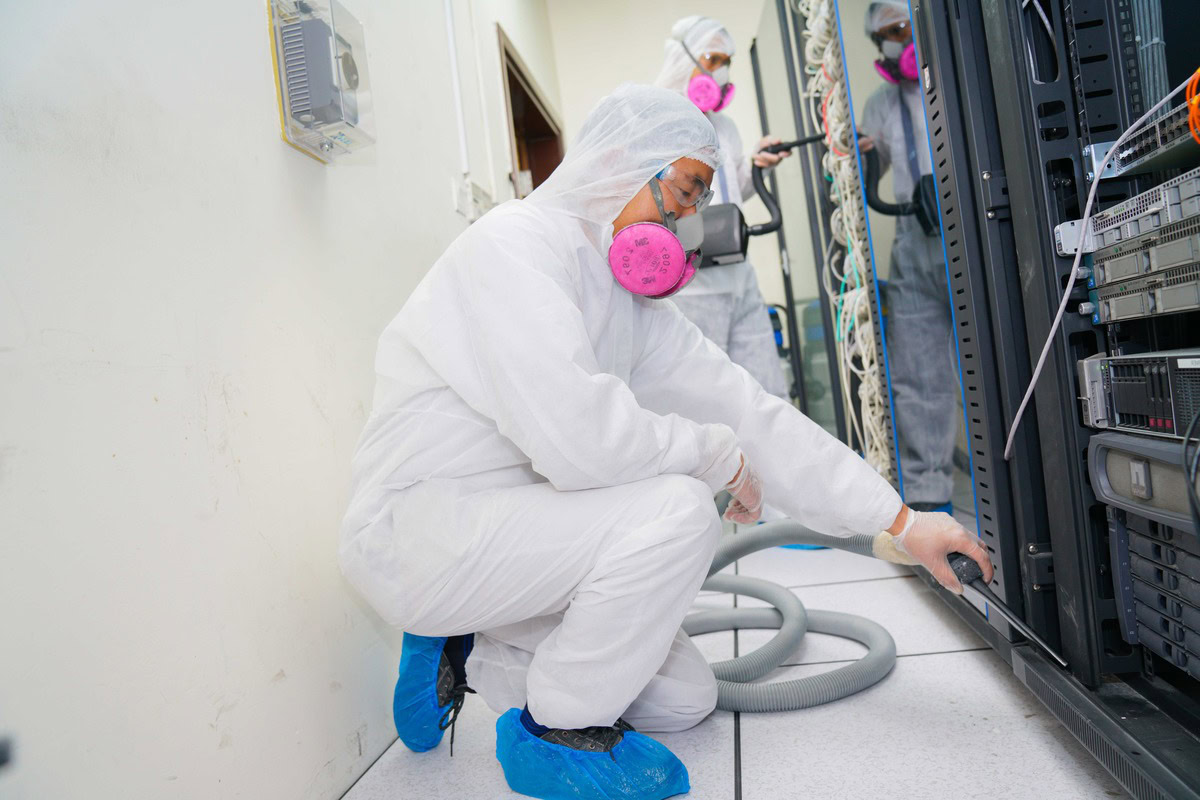
Through routine maintenance schedules, data centers can identify potential issues early and address them before they escalate. This foresight protects against security vulnerabilities and ensures that key components such as storage systems and backup systems are always ready to meet power demand. Adopting preventive maintenance practices ultimately ensures efficient operation and extends the life of critical systems. Wearing a full body cleanroom suit when working in the data center ensures no dust or lint from your street clothes will be released into the environment.
Predictive Maintenance: Anticipating Issues Before They Arise
Predictive maintenance in data centers leverages data analysis and monitoring tools to foresee potential failures before they occur. This proactive approach enables real-time monitoring, allowing for timely interventions that prevent costly equipment breakdowns. By employing predictive maintenance, data center operators can significantly reduce downtime and ensure the efficient operation of critical systems.
The process involves continuous monitoring of key components, such as network switches and cooling system motors. For example, temperature fluctuations in network switches can be tracked to detect anomalies, prompting adjustments only when necessary. Similarly, sensors measure vibration patterns in cooling motors to indicate when maintenance is required, thus avoiding unplanned outages.
Implementing predictive maintenance not only optimizes operational efficiency but also minimizes the risk of unexpected failures. This forward-thinking strategy ensures regular maintenance is performed precisely when needed, aligning with overall maintenance requirements and enhancing the reliability and longevity of center equipment.
Reliability-Centered Maintenance: Ensuring Long-Term Performance
Reliability-Centered Maintenance (RCM) is a strategic approach designed to ensure the reliable operation of data center systems. Unlike traditional preventive maintenance, RCM tailors tasks based on each equipment’s operational conditions and potential failure modes. This strategy allows for prioritizing maintenance tasks according to their impact on data center reliability and availability.
RCM is more cost-effective and resource-efficient by addressing only the critical components. It evaluates the consequences and likelihood of equipment failure, focusing efforts where they matter most. In non-critical areas, components are replaced post-failure, while critical ones undergo regular inspections and timely replacements.
The benefits of RCM include reduced likelihood of component failure and optimized maintenance efforts. By focusing on key components, data centers maintain high operational efficiency and support long-term performance. This approach ensures that maintenance resources are concentrated on areas that significantly impact data center operations.
Key Advantages of RCM:
- Tailored maintenance practices
- Prioritization of critical tasks
- Cost and resource efficiency
- Reduced component failure risks
- Enhanced long-term performance
Implementing RCM helps data centers meet their maintenance requirements effectively, promoting reliable and efficient operations.
IT Equipment Maintenance: Keeping Your Hardware Running Smoothly
Maintaining IT equipment is crucial for ensuring reliable data center operations. Preventive maintenance involves routine checks to prevent potential issues, though overuse can hike costs unnecessarily. Reliability-centered maintenance helps prioritize these tasks by assessing the criticality of systems, focusing resources where they’re needed most.
Corrective maintenance steps in when problems occur, emphasizing the repair or replacement of faulty components to restore reliability. Combining preventive and predictive maintenance is key to minimizing unplanned downtime and ensuring timely equipment replacements.
Regular, comprehensive maintenance can significantly boost uptime and reduce operational costs. By addressing potential problems proactively, data centers can enhance their security and efficiency. Investing in a well-rounded maintenance strategy helps preemptively tackle issues, ensuring smooth and reliable operations.
Consider these maintenance types for optimal outcomes:
- Preventive Maintenance: Routine checks to catch issues early.
- Corrective Maintenance: Repairs done after issues occur.
- Predictive Maintenance: Uses data to predict when failures might happen.
- Reliability-centered Maintenance: Focuses on the most critical systems.
Regular maintenance not only improves efficiency but also supports the seamless operation of storage systems, backup systems, and critical IT infrastructure.

Electrical Systems Management: Powering Efficiency
Effective data center operations hinge on the consistent performance of critical systems, especially electrical infrastructure. Essential components such as power distribution units (PDUs), uninterruptible power supply (UPS) systems, and backup generators must function flawlessly to mitigate risks of power outages and ensure operational continuity.
Regular maintenance of UPS systems is crucial. It involves monitoring battery health, assessing load capacities, and guaranteeing seamless transitions during outages. Additionally, backup generators demand routine inspections—including checks on fuel levels and mechanical parts—to verify their readiness to handle power demands. Meanwhile, PDUs require assessments to optimize power distribution and identify any potential wear or electrical connection issues.
Lastly, maintaining safety and reliability necessitates regular inspections of switchgear components like circuit breakers and relays within data centers. By adhering to a comprehensive maintenance schedule, data centers can support efficient operation and reduce vulnerabilities, ensuring robust protection against power instabilities.
Cooling Systems Optimization: Maintaining Ideal Temperatures
Cooling systems are vital for maintaining ideal temperatures in data centers, ensuring optimal performance and protecting sensitive equipment. Routine inspection, cleaning, and servicing of HVAC units help maintain proper temperature, humidity levels, and airflow. Key maintenance tasks include checking refrigerant levels, inspecting compressors, and cleaning evaporator and condenser coils as part of regular maintenance for chillers.
Cooling tower maintenance requires water quality assessments and treatment to prevent corrosion, scaling, and microbial contamination, which are crucial for their operational effectiveness. Additionally, Computer Room Air Conditioning (CRAC) units need regular filter replacements, fan inspections, and refrigerant level monitoring to maintain efficient cooling performance.
Regular inspections of heat exchangers, pumps, piping, and humidifiers prevent leaks and maintain system efficiency. Predictive maintenance and routine checks enhance the reliability of cooling systems, thus ensuring continuous data center operations. By adhering to a structured maintenance schedule, operators can prevent power outages and manage power demand effectively, keeping critical systems secure.
Telecommunications Cabling: Ensuring Seamless Connectivity
Telecommunications cabling is vital for seamless connectivity in data center operations. Fiber optic cables transmit data via light and need routine inspections to remain clean and free of contaminants that may hinder performance. Twisted pair cables, commonly used in LAN connections, require regular checks for wear and secure connections to maintain optimal functionality.
Coaxial cables should be inspected regularly for physical damage and signal quality. This prevents performance degradation from potential kinks or bends. Patch panels, serving as central hubs for cabling networks, benefit from proper labeling and regular inspections, expediting troubleshooting and fault recovery. Cleanroom wipes should be used when cleaning or wiping any cabling to ensure no lint is released into these sensitive areas. Cleanroom gloves also should be worn to ensure no oil or grease from your hands is left on the cables or hardware.
Cable trays must not be overloaded, and inspecting them for physical damage is essential for the overall integrity of the cabling infrastructure. Regular maintenance in these areas ensures reliable data transmission and prevents disruptions in critical systems. Following a maintenance schedule for these components is crucial for efficient operation and avoiding costly corrective maintenance interventions.

Regular Audits and Assessments: A Proactive Approach
Regular audits and assessments are critical components of effective data center maintenance. They help identify potential issues before they lead to system failures or costly outages. By conducting preventive maintenance, including visual inspections, data center managers can ensure that all systems and equipment operate efficiently.
Environmental Monitoring Systems (EMS) play an essential role in continuously watching over conditions like temperature and humidity. These systems alert staff if thresholds are exceeded, thereby preventing potential damage. Routine cleaning practices are also crucial, as they prevent dust accumulation, which can cause overheating or premature equipment failure.
Keeping all equipment updated with the latest firmware and software patches is vital for minimizing disruptions. This proactive maintenance strategy not only addresses security vulnerabilities but also supports reliable, efficient operation. Ensuring that preventive measures are in place helps maintain optimal data center performance, maximizing uptime and reducing the need for corrective maintenance actions.
Benefits of Outsourcing Maintenance: Leveraging Expert Services
Outsourcing data center maintenance to third-party service providers offers organizations an effective way to manage complex infrastructure. By engaging external experts, companies gain access to hardware repairs, software updates, and continuous support through annual maintenance contracts. This strategy extends the lifespan of data center equipment and provides a cost-effective alternative to extensive hardware refreshes or costly post-warranty OEM support. These data center maintenance companies will use the proper cleanroom apparel and cleanroom cleaning supplies to ensure no harm to the environment.
Utilizing third-party maintenance allows internal resources to focus on strategic business areas, enhancing overall operational efficiency. Additionally, organizations in regions with a high concentration of data centers benefit from an increased availability of qualified maintenance providers, ensuring they can easily find suitable support. This availability simplifies meeting maintenance requirements and helps maintain efficient operations. Cleanroom documentation including cleanroom paper, notebooks & pens are recommended and are anti-static and clean-processed for safe recordkeeping in the data center.
Outsourcing maintenance ensures key components and critical systems are continuously monitored and serviced, reducing the risk of power outages and Security Vulnerabilities. By leveraging expert services, companies can enhance their backup systems, suppression systems, and uninterruptible power supply, contributing to reliable, secure, and efficient data center operations.

Developing Robust Internal Protocols: Building a Strong Foundation
Developing robust internal protocols is crucial for building a strong foundation in data center maintenance. Implementing a comprehensive checklist of maintenance actions with established due dates and completion records enhances accountability and helps efficiently track center equipment servicing. Reliability-centered maintenance allows managers to prioritize maintenance tasks based on operational conditions and failure modes, optimizing efforts and addressing critical systems effectively.
Routine maintenance should include regular environmental monitoring of key components like humidity, temperature, and airflow. This practice helps maintain stable indoor climates, reducing the frequency of equipment replacement. Contact Cleanroom Connection to discuss your data center maintenance needs. We can recommend and sample the correct cleanroom products to be used when cleaning your data center. Choose from our vast array of cleanroom suits, wipes, gloves, mops and anti-static cleaning tools made for use in sensitive data centers.