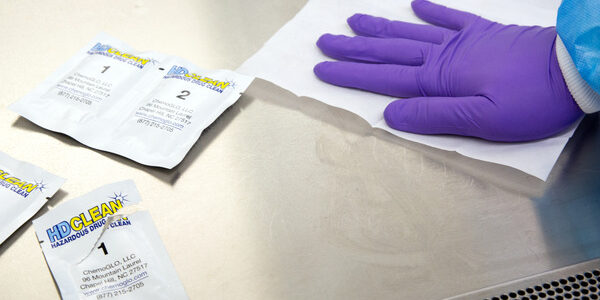
A wipe that is not matched to your cleanroom class does not just underperform. It creates a compliance gap. Pre-saturated wipes deliver a fixed volume of a pre-loaded disinfectant or IPA solution. Dry wipes accept whatever cleaning agent you apply to them. The distinction sounds simple, but the wrong choice in a USP 797 primary engineering control or an ISO Class 5 aseptic environment can produce contamination results that show up in your next environmental monitoring report, not in your cleaning log.
Both formats have their place. The format that belongs in your facility depends on your ISO classification, your USP compliance obligations, your cleaning protocol, and whether your product needs are better served by convenience or by control. This guide covers both formats in detail so you can match the right wipe to your environment.
What Are Pre-Saturated Cleanroom Wipes?
Pre-saturated wipes come loaded with a specific chemical solution. The standard options are 70% isopropyl alcohol, sterile water, or a quaternary ammonium disinfectant. The saturation level is controlled at the manufacturing stage, which means every wipe in the canister or pouch delivers a consistent chemical load. There is no dilution error. There is no employee-to-employee variation in how much solution gets applied.
Most non-sterile pre-saturated wipes are rated for ISO Class 6, 7, and 8 environments, where contamination control is important but the stakes of an individual wipe do not rise to the level of an aseptic process. Sterile pre-saturated options exist for ISO Class 5 critical zones, but they come with a higher cost and specific documentation requirements. Substrate selection favors polyester, poly-cellulose blend, or nonwoven polyester for low particulate release and compatibility with the pre-loaded chemical.
Cleanroom Connection stocks presaturated IPA wipes and a range of sterile wipe formats. Browse the full selection: Presaturated Alcohol Wipes and Sterile Wipes.
What Are Dry Cleanroom Wipes?
With dry cleanroom wipes, the operator controls which chemical gets applied and when. The wipe is supplied without any pre-loaded solution; apply the cleaning agent separately by spraying directly onto the surface, saturating a folded wipe, or following a documented two-step protocol. The substrate does the mechanical work. The separately applied disinfectant or IPA does the chemical work.
Dry wipes offer more flexibility than pre-saturated formats. A facility running a sequential disinfection protocol, for example a sporicide followed by an IPA wipe-down in a USP 797 ISO Class 5 PEC, will use dry wipes because the protocol requires applying two different agents in a controlled sequence. Pre-saturated wipes cannot support that without using two separate pre-saturated products.
Substrate options in dry cleanroom wipes include knitted polyester, poly-cellulose blend, nonwoven polyester, foam, and microfiber. Each has different particle release profiles and chemical compatibility ratings. ISO Class 3 and 4 environments require knitted polyester or low-particulate foam. ISO Class 5 through 8 can use a broader range, depending on the task.
Cleanroom Connection carries dry wipe formats across multiple substrates: Polyester Wipes, Nonwoven Wipes, Foam Sponge Wipes, and Microfiber Wipes.
How Your ISO Class Determines Which Format You Need
ISO classification is the first filter. Your ISO class tells you the maximum allowable particle count per cubic meter of air. The tighter the class, the more controlled your wipe selection needs to be.
ISO Class 5 aseptic environments, the classification required for the primary engineering control in USP 797 sterile compounding, are the most demanding. In these environments, dry sterile wipes used with a validated disinfectant give you the control you need for sequential cleaning steps. If you use a pre-saturated product here, it must be sterile, and the disinfectant it carries must be validated and documented for use in that specific environment. Lot numbers for sterile products need to be recorded as part of your cleaning documentation.
ISO Class 6 and 7 environments, found in pharmaceutical manufacturing support areas, biotech labs, and electronics assembly, can use either format effectively. Pre-saturated IPA wipes are the standard choice for routine decontamination of surfaces and equipment because the fixed saturation level eliminates one variable in a cleaning process that already has many.
ISO Class 8 and unclassified controlled environments have the most flexibility. Pre-saturated wipes are often the practical choice here for cost and convenience. The contamination control stakes are lower, and the consistency of a pre-saturated wipe reduces the chance of under-applying chemical.
USP 797 and USP 800 Compliance Considerations
For compounding pharmacies, wipe selection is a compliance decision, not just an operational one.
USP 797 requires that sterile compounding take place in an ISO Class 5 primary engineering control. Surfaces in that PEC must be cleaned and disinfected using sterile products. Your wipes in the ISO Class 5 zone need to be sterile. Non-sterile pre-saturated wipes, even IPA-loaded ones, do not meet that requirement in the PEC. Sterile dry wipes with a separately applied, validated sterile disinfectant do.
USP 800 governs the handling of hazardous drugs, including surface decontamination requirements. Spill cleanup kits, decontamination wipes rated for hazardous drug contact, and the documented use of an EPA-registered disinfectant are all part of USP 800 compliance. Pre-saturated wipes used in a USP 800 environment must carry a disinfectant appropriate for hazardous drug surface decontamination. A standard 70% IPA wipe does not meet that requirement.
The pharmacy cleanroom cleaning guide on cleanroomsupplies.com covers cleaning sequence and product selection for USP 797 and USP 800 environments in more detail.
Documentation and Lot Traceability
Pre-saturated sterile wipes ship with certificates of sterility and lot numbers. Your cleaning log should capture the lot number for every sterile product used in an ISO Class 5 zone. An inspector reviewing your cleaning records can verify that the products used were sterile and within their use-by date.
Dry wipes require that you document both the wipe and the disinfectant used. If you are applying a separately supplied sporicide or disinfectant, that product also needs a lot number in your cleaning log. For USP 797 facilities, this two-part documentation is standard. It gives you full traceability for both the mechanical and chemical components of your cleaning event.
When Pre-Saturated Wipes Are the Right Choice
Three situations call for pre-saturated wipes specifically.
- ISO Class 6, 7, and 8 routine decontamination. Single-agent wipedowns on surfaces and equipment are where pre-saturated IPA wipes perform well. The fixed saturation level removes one variable from a cleaning process that already has many.
- Pass-through cleaners, anteroom surfaces, and equipment exteriors. Sterile product is not required in these areas, but contamination control still matters. Pre-saturated wipes deliver consistent chemical load without requiring the operator to manage a separate disinfectant supply.
- Single-protocol, simplified procurement. When the cleaning protocol does not require sequential disinfection steps, one pre-saturated SKU is easier to manage and reorder than maintaining separate wipe and disinfectant inventories.
When Dry Cleanroom Wipes Are the Right Choice
Control over chemical concentration and application sequence drives most dry wipe decisions.
- USP 797 ISO Class 5 PEC cleaning. Sterile wipes are required in the primary engineering control, and sequential disinfection protocols, sporicide first and IPA wipe-down second, are the norm. Dry wipes support both steps without requiring a substrate change.
- Validation studies. When the cleaning agent needs to be independently controlled and varied, dry wipes let you change the chemistry without changing the substrate.
- ISO Class 3 and 4 environments. Substrate specification is the primary selection driver in high-particulate-concern environments. Knitted polyester or low-particulate foam meets the particle release requirements these classes impose.
- Custom concentration requirements. Some tasks require a concentration or application volume that no pre-saturated product matches. Dry wipes put the application decision in the operator’s hands.
Cleanroom Wipes at Cleanroom Connection
Both pre-saturated and dry wipe formats are stocked at Cleanroom Connection across ISO class ratings and sterility options. The full wipes category includes presaturated IPA wipes, sterile and non-sterile polyester, nonwoven, foam, microfiber, and chemical wipe formats from authorized distributors including Veltek/VAI and Decon Labs.
Browse the full wipes category at cleanroomsupplies.com/wipes. Not sure which format fits your environment? Our team will review your ISO class and protocol and recommend the right product. Free samples are available on most lines.
The choice between pre-saturated and dry cleanroom wipes is not a preference decision. ISO class, USP compliance requirements, and your cleaning protocol determine the format. Using a non-sterile pre-saturated wipe in an ISO Class 5 PEC is a compliance gap. Using a dry wipe without a validated disinfectant and documented lot traceability is also a compliance gap. Both are avoidable if the selection decision is made against the right criteria.
Not sure which wipe format is right for your cleanroom environment? Submit your product list at cleanroomsupplies.com and receive a compliant product recommendation and pricing within 30 minutes.
Frequently Asked Questions
What is the difference between sterile and non-sterile pre-saturated wipes?
Non-sterile pre-saturated wipes are manufactured in a controlled environment but are not gamma-irradiated or terminally sterilized. They are appropriate for ISO Class 6, 7, and 8 surfaces. Sterile pre-saturated wipes are gamma-irradiated, individually packaged or packed in sterile pouches, and ship with a certificate of sterility. They are required in ISO Class 5 primary engineering controls under USP 797.
Can I use a pre-saturated IPA wipe in an ISO Class 5 environment?
Only if the wipe is sterile. A non-sterile pre-saturated IPA wipe used in a USP 797 ISO Class 5 primary engineering control does not meet the sterile product requirement. Sterile pre-saturated IPA wipes are available and appropriate for Class 5 use, provided the product is validated for that environment and lot numbers are documented.
What does USP 797 require for wipes in the primary engineering control?
USP 797 requires that all products used in the ISO Class 5 PEC be sterile. That applies to wipes and to any cleaning agent applied to them. Sterile dry wipes used with a separately applied sterile disinfectant, or sterile pre-saturated wipes with a validated disinfectant, both satisfy this requirement. Non-sterile wipes do not.
Can dry cleanroom wipes be used in ISO Class 5 environments?
Yes, provided they are the sterile version and are used with a validated sterile disinfectant. Sterile dry wipes are the preferred substrate in USP 797 compounding environments specifically because they support sequential cleaning steps, applying a sporicide first and an IPA wipe-down second, using a single substrate across both steps.
Do I need to document lot numbers for cleanroom wipes?
For sterile wipes used in ISO Class 5 environments, yes. USP 797 facilities are expected to record the lot number and expiration date of all sterile products used in cleaning the PEC. Pre-saturated sterile wipes ship with certificates of sterility that include this information. For dry wipes used with a separately applied disinfectant, both the wipe lot and the disinfectant lot should be captured in your cleaning log.