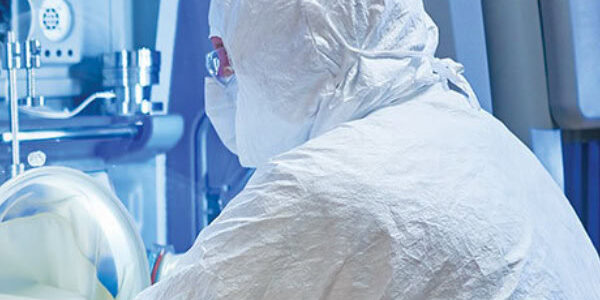
Tyvek suits are one of the most commonly used options in controlled environments, but they’re not the only choice. In cleanroom environments, suit selection isn’t just about the material. It’s tied to your ISO classification, your gowning procedures, and how your team actually works inside the space day to day.
This guide walks through how Tyvek suits compare to other disposable cleanroom suits, what each option is designed to do, and how to choose the option that makes sense for your environment.
What is a Tyvek Suit?
Tyvek is a nonwoven material made from high-density polyethylene fibers. Instead of being woven like traditional fabric, it’s created through a flash-spinning process that forms a dense, continuous sheet.
In cleanroom environments, Tyvek is often used for disposable coveralls because it strikes a balance between:
- Particle barrier performance
- Lightweight construction
- Single-use convenience
Tyvek suits are designed to minimize shedding and help block contaminants from passing through the material. That combination is why they’re widely used across pharmaceutical, biotech, medical device, and electronics manufacturing environments.
Cleanroom Suit Materials at a Glance
| Factor | Tyvek | Polypropylene / SMMS | Microporous / Laminated Materials |
| Particle Control | Reliable barrier for dry particles | Lower overall barrier | Strong barrier; often meets or exceeds Tyvek |
| Breathability | Moderate | More breathable | Less breathable due to added layers |
| Durability | Holds up well for regular movement | Lightweight but less durable | More tear-resistant, but can feel stiff |
| Fluid Resistance | Limited protection against liquids | Minimal protection | Designed for better splash and fluid resistance |
| Comfort | Balanced for all-day wear | More comfortable for active tasks | Can feel warmer and less flexible |
| Best Fit | Everyday cleanroom use with balanced needs | Short tasks or lower-risk environments | Work that involves liquids or added exposure |
These differences show up most clearly during gowning audits, environmental monitoring, and extended-wear conditions, not just in product specs.
How Tyvek Compares to Other Cleanroom Suit Materials
Tyvek is just one of several materials used in disposable cleanroom apparel. Others include polypropylene, SMMS (spunbond-meltblown-meltblown-spunbond), microporous film laminates, and coated or laminated materials.
Here’s how they differ in practice:
Particle Control
Tyvek is a reliable option for controlling dry particles, which is why it’s widely used in ISO-classified environments. Some multilayer materials (like microporous laminates) can match or exceed that performance, depending on how they’re constructed.
Breathability
This is where differences become more noticeable.
- Tyvek: Moderate breathability
- SMMS: Often more breathable, with low barrier performance
- Laminated materials: Lower breathability due to added film layers
Durability
Tyvek overalls hold up well during regular movement and longer wear. Lighter materials like polypropylene are easier to wear but don’t last as long, while laminated suits are more tear-resistant but can feel stiff.
Fluid Resistance
Standard Tyvek offers limited protection against liquids. If splash resistance matters, laminated or coated materials are usually a better fit.
Use Case Fit
- Tyvek: General cleanroom use with balanced performance
- Polypropylene/SMS: Lower-risk or shorter-duration tasks
- Laminates: Situations that involve fluids or added exposure
The takeaway: suit material choice isn’t just about barrier performance. It’s about how that performance holds up in real working conditions.
If you’re reviewing your current setup, it’s also worth looking at how suits are being used day to day. Our guide to wearing and maintaining Tyvek suits covers common mistakes, proper handling, and what to watch for over time.
6 Things to Consider When Choosing a Cleanroom Suit
Choosing a suit means considering how that material performs in your environment, with your team, during real tasks.
ISO Classification
Your cleanroom classification sets the baseline. Higher classifications (like ISO 5 or ISO 6) require tighter control over particles, which can influence both material choice and garment design. At the same time, your gowning process, how people move through the space, and the level of contamination risk all factor into what will actually work.
To see what cleanroom apparel looks like at each level, read our guide to ISO cleanroom classifications.
Task and Process Sensitivity
The type of work being done matters just as much as the environment. Handling sensitive products, moving between zones, or working with higher-risk materials all change what you need from a suit. As processes become more sensitive, stronger barrier performance and consistent gowning become more important.
Comfort and Wear Time
When suits are worn for longer periods, comfort starts to affect day-to-day operations. Breathability and heat buildup can influence how consistently protocols are followed, how productive a shift is, and how often suits need to be adjusted or replaced.
Fit and Mobility
Restricted movement tends to lead to workarounds. When a suit is difficult to move in, it can result in unnecessary contact or improper use. A better fit and more flexibility help reduce that risk and support more consistent use.
Full Apparel System Compatibility
A suit needs to work alongside the rest of your gowning setup—hoods, masks, gloves, and boot covers. If those components don’t fit well together, or materials don’t align, gaps can form that affect overall contamination control.
Budget and Purchasing Needs
Cost plays out over time, not just at the point of purchase. How often suits are changed, how inventory is handled, and how well different options hold up during use all affect the overall cost of a disposable program.
When a Tyvek Suit Makes Sense
Once you look at performance and day-to-day use together, it becomes easier to see where Tyvek fits.
Tyvek suits and accessories are often a good choice when:
- Dry particle control is a primary concern
- Tasks require moderate durability over a full shift
- Disposable apparel is used to maintain consistency
- Teams need a suit that performs predictably across different roles
For many ISO-classified environments, Tyvek works as a middle ground, offering more structure and protection than lighter options without the rigidity of heavier laminated materials.
When Another Cleanroom Suit May Be a Better Choice
Tyvek is a very popular choice, but it isn’t the right fit for every situation. Other materials may be a better option when:
- Breathability is a priority – High-activity environments or long wear times may benefit from lighter materials like SMMS
- Liquid or splash resistance is required – Laminated or coated suits are better suited for fluid exposure
- Tasks are short or lower-risk – Simpler materials may meet requirements without over-specifying apparel
- Conditions are more specialized – Some processes call for materials designed for specific chemical or contamination risks
The goal isn’t to upgrade or downgrade, but to match the material to the real conditions inside your cleanroom.
Questions to Ask Before You Buy Cleanroom Suits
Before placing an order, it helps to step back and pressure-test your selection. If you’re comparing options or rethinking your current setup, these questions can help narrow down material selection:
- What ISO classification does this suit need to support?
- What types of contaminants are we controlling: particles, liquids, or both?
- How long are suits worn during a typical shift?
- Are there ongoing comfort or compliance issues?
- Does this suit work well with the rest of our gowning system?
- How often are suits changed, and what does that mean for cost over time?
- Are there recurring issues like tearing, overheating, or poor fit?
Cleanroom Suit Selection Should Support the Whole Gowning Process
Even the right suit won’t perform as expected if the rest of the gowning process isn’t aligned.
Cleanroom apparel works as a system, not a standalone product. Even a high-performing suit can fall short if it’s not aligned with your gowning procedures, training, and monitoring practices.
That system typically includes:
Consistency across these areas matters. Gaps in coverage, mismatched materials, or inconsistent gowning practices can introduce variability, especially in higher classification environments.
This is also where gowning audits and monitoring programs come into play. Apparel choices should support those efforts, not complicate them.
Find the Right Cleanroom Apparel for Your Process
Tyvek suits are a popular choice in cleanroom apparel because they offer a balance of particle control, durability, and usability across many cleanroom environments. But they’re not a one-size-fits-all solution. The right suit depends on your classification, processes, team operations, and full gowning system. Material is just one part of that decision.
Not sure which options align with your cleanroom requirements? Reach out to our team for guidance on building a consistent, compliant gowning system that works in practice.
For more insights on cleanroom standards and apparel selection, explore our blog resources.